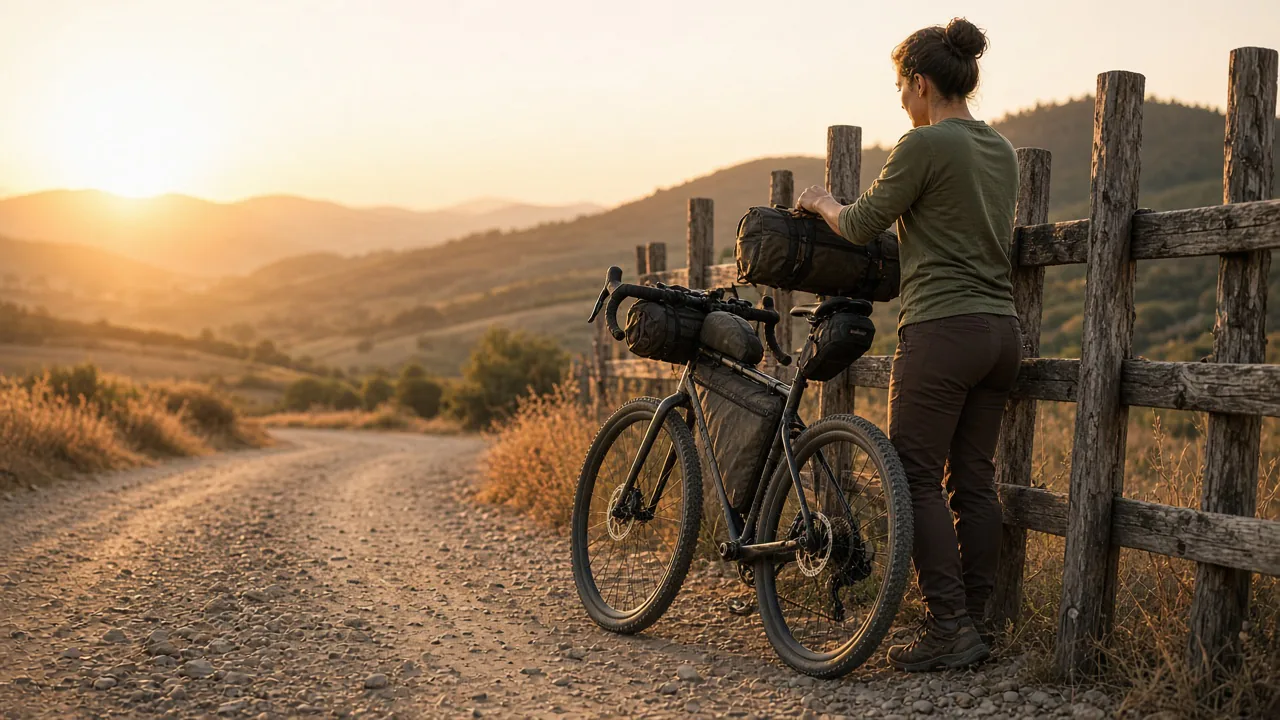
If you're a woman under about 5'4", standard bikepacking advice may not fit you. Standard geometry is built around an average male body. Standover heights that assume longer legs, 700c wheels that can mean toe overlap or a tall standover on small frames, cranks specced for longer legs, and reach measurements that can leave you stretched too far forward.
This guide draws on the captured comments from a 43-comment thread in the Women’s Bikepacking & Bike Touring group, where women in the group asked: 26" or 700c wheels, and does it actually matter?
650b vs 700c (or 26") for women on smaller frames: the real question
The original question — whether smaller wheels would be more comfortable than 700c at 5'3" — is really a geometry question. On a small frame, big 700c wheels can mean toe overlap, a tall standover, and handling that feels twitchy rather than stable.
The captured advice wasn't "small wheels good, big wheels bad." It kept coming back to the whole bike: standover height and reach, not just the number on the tire.
Women in the group put it plainly: "I'm exactly that height with shorter legs than is usual for this height... Look for the standover height, that will likely be your limiting factor. I use Bike Insights to look at the geometry and to compare bikes."
That last tip is useful for bike shopping: Bike Insights lets you overlay and compare frame geometries side by side, so you can check standover and reach instead of relying on the size label.
26", 650b, or 700c: the options women in the group discussed
29" mountain-bike wheels are the same rim as 700c under another name — for this guide, treat 29" like 700c.
650b can be the sweet spot for a woman on a smaller frame. One setup from the thread: a 5'2" woman on a 48 frame with 650B tires and 165mm cranks — smaller choices across frame, wheels, and cranks. 650b wheels can mean more proportional handling and better standover on a small frame.
Women in the group ride 650b on custom bikes: "I'm 5'0" and have a custom bike... The builder made this work by using 650b wheels. The only downside, imo, of 650b wheels is the smaller selection of tires."
If your route takes you far from bike shops, tire availability matters. 26" wheels have the opposite profile: maximum tire availability worldwide, at the cost of feeling dated and occasionally slower-rolling.
26" is not obsolete. If you're touring somewhere remote, 26" is worth considering for tire availability.
700c can work — but check the geometry. A woman in the group asked ("did you find 700c uncomfortable?") and it comes down to the whole bike: on some small 700c frames, standover gets tall. Consider wheel size alongside standover and reach.
Standover height, reach, and crank length: a fit checklist for smaller frames
Our checklist, built from the captured threads:
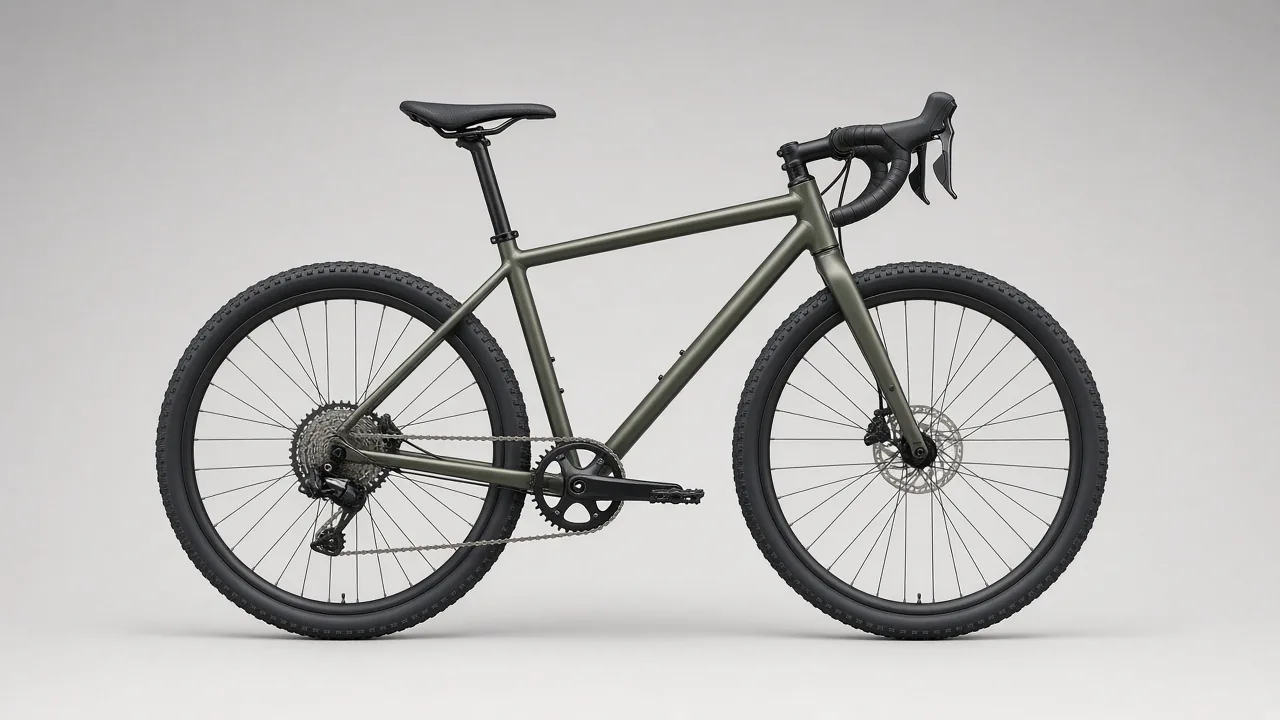 ReachStackStandover
- Standover. The height of the top tube above the ground.
- Reach. The horizontal distance from the bottom bracket to the top of the head tube.
- Stack. The vertical distance from the bottom bracket to the top of the head tube.
- Standover height first. Women in the group called standover a likely limiting factor. You want to straddle the bike with flat feet and clearance, with the bike loaded the way you'll ride it.
- Reach, not just seat tube. A frame can have perfect standover and still stretch you too far forward. Compare reach, and don't rely on the size label.
- Crank length. Standard 170–175mm cranks are specced for longer legs. Shorter cranks (165mm or shorter) came up in the thread as an often-overlooked adjustment. Worth raising with a fitter.
- Get measured. Women in the group, from the saddle thread: "Go to a good bike shop & have your pelvic bones measured." A professional fitter measures you, not the size chart.
- Compare before you buy. Bike Insights lets you line up candidate bikes side by side. Check the numbers against a bike you already know fits.
165 vs 170 mmFitting bikepacking bags on a small frame
One idea from the group, plus a few practical checks:
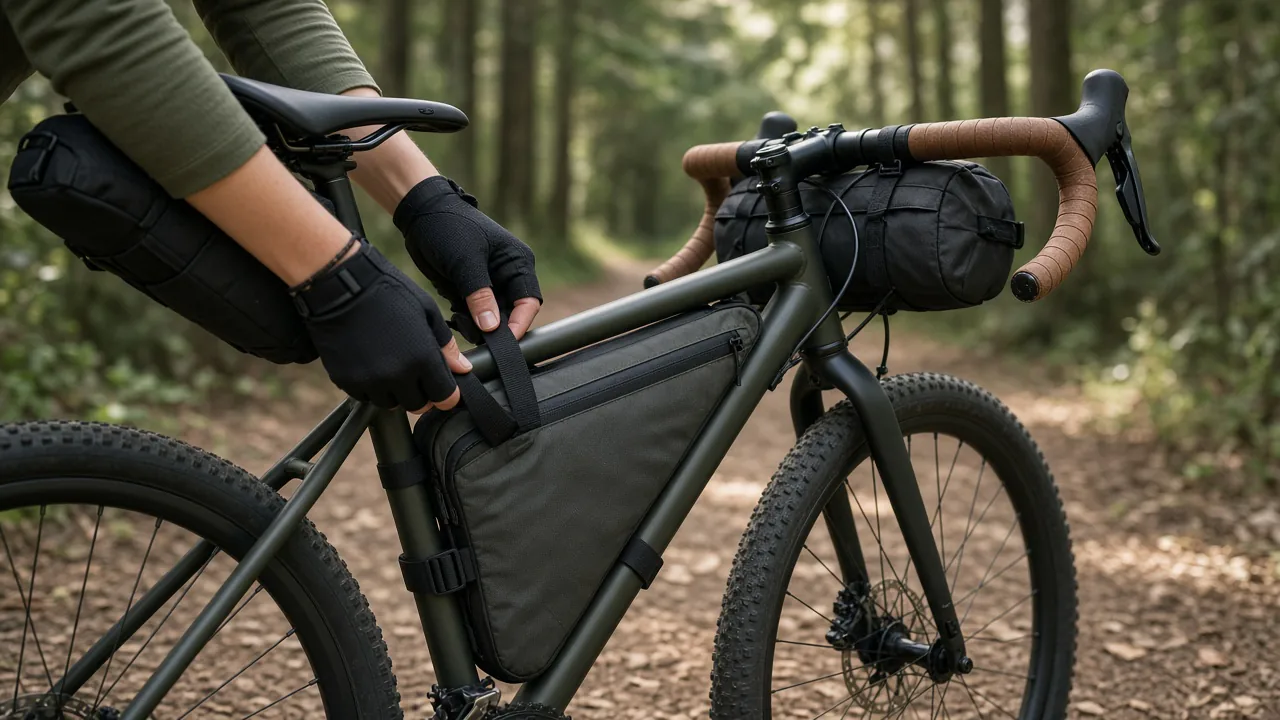
- Front fork cages. Women in the group suggested them: "Would they fit a front fork cage? That would give them a bit more structure and separation on rough terrain." Whether a cage fits depends on your fork, so check before you buy.
- A vintage Raleigh thread (33 comments) crowdsourced fork-bag attachment ideas. If your fork lacks mounts, ask a shop what is safe for your fork before you strap anything to it.
- Check clearances loaded. Load the bike the way you'll ride it and check that no bag touches a tire before you go.
For what goes in those bags on a first trip, see the first overnight packing list.
Small wheels, big trips
Women in the group have taken small-wheel bikes on big trips, including the Shetland Islands on a Brompton folding bike — nicknamed "Betty Brompton" — camping at Scalloway. Small wheels don't have to limit a big trip.
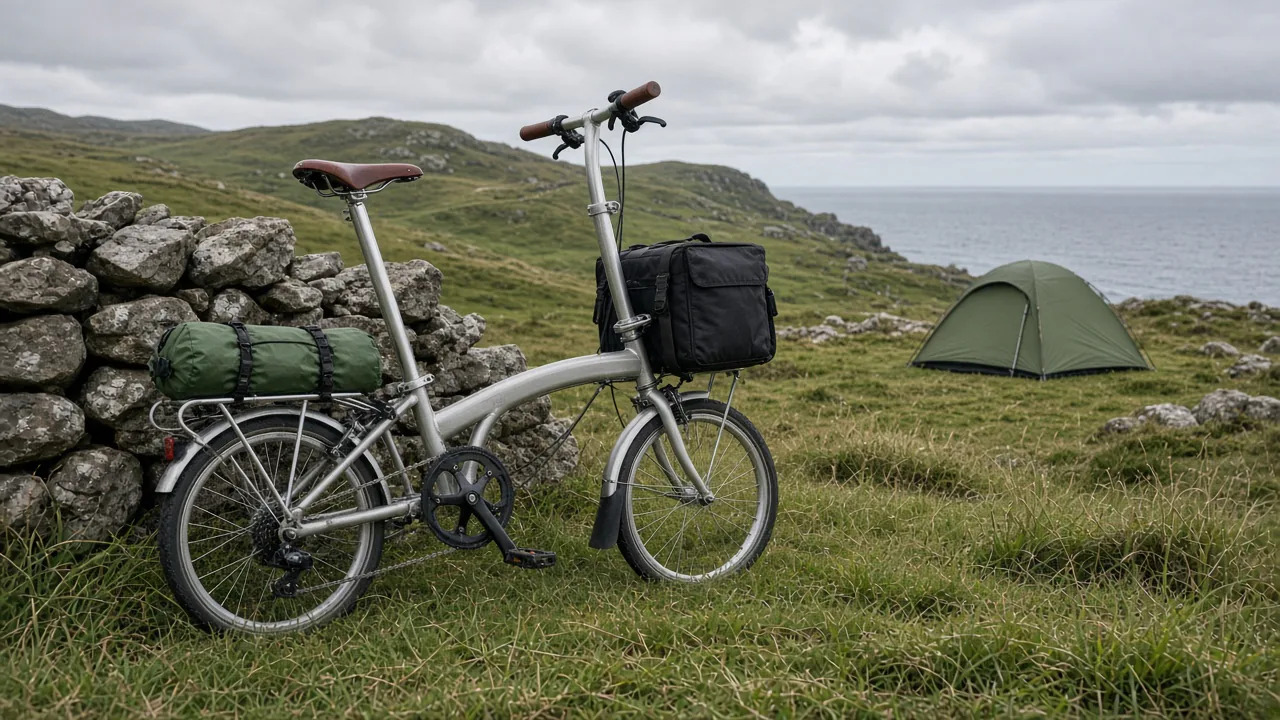
And if the bike you already own might work, women in the group say ride it first: "I would definitely start with the bike you have, see if touring is for you, not everyone likes it, then upgrade."
Setup summarized
- Frame: size by standover and reach, not the size label — use the Bike Insights comparison above.
- Wheels: 650b can be a good compromise around 5'0"–5'4" (know the tire-selection trade-off); 26" is worth considering for remote touring; 700c works if the geometry does.
- Cranks: consider shorter than stock (one setup from the thread lists 165mm).
- Fit: get measured; a professional fitting over guessing.
- Bags: check how much room your frame has for bags, consider the fork only after checking fit and mounts, and check tire clearance with the bike loaded.
- Mindset: start with the bike you have. Upgrade when you know what you need.
What the group says
- Women in the group: "I'm exactly that height with shorter legs than is usual for this height... Look for the standover height, that will likely be your limiting factor. I use Bike Insights to look at the geometry and to compare bikes."
- Women in the group: "I'm 5'0" and have a custom bike... The builder made this work by using 650b wheels. The only downside, imo, of 650b wheels is the smaller selection of tires."
- Women in the group: "I would definitely start with the bike you have, see if touring is for you, not everyone likes it, then upgrade."
- Women in the group, on fork cages: "Would they fit a front fork cage? That would give them a bit more structure and separation on rough terrain."
- Women in the group: "Go to a good bike shop & have your pelvic bones measured."
Source note
This piece draws on discussion in the Women’s Bikepacking & Bike Touring group (research window June–September 2026). Quotes are from women in the group. Individual names are not used.
The wheel, fit, and crank explainers use published definitions: Sheldon Brown’s tire chart, his standover note, his crank page, and Bike Insights.
A note on methodology: comments were captured as visible at research time (Sept 21, 2026) under Facebook's default "Most relevant" ordering; not every comment in every thread was captured. Primary source: a thread on 26" vs 700c wheels (43 comments). Supporting material: the group's saddle thread (Aug 21, 2026), a 1980s Trek 520 upgrade thread, a vintage Raleigh fork-bag thread, and a Shetland-on-a-Brompton trip post.
Community experience, not professional fitting advice. See a professional fitter for persistent pain or numbness.
Want the next story when it is up? Get the newsletter.